Tài liệu

 Tiếng Việt
 Tiếng Anh
 Tiếng Trung Tiếng Việt Tiếng Anh Tiếng Trung

Ngày đăng: 03/11/2026
Nội dung bài viết
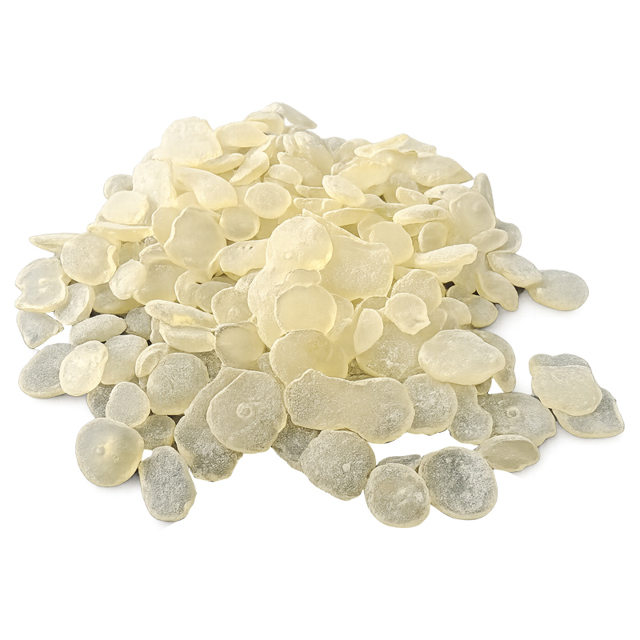
Thermoplastic road marking resin is the binder resin used in hot-applied road marking compounds. It helps bind pigments, fillers and glass beads into a cohesive marking after the compound is heated, applied to pavement and allowed to cool. Emchemical’s RM 105A and RM 115A are maleic modified rosin resins developed for thermoplastic systems.
These grades are used in formulations for road lines, parking areas and airport markings. According to Emchemical’s technical data sheets, the RM series is designed for hot-melt application at 180–220°C. The finished marking compound’s performance depends on the complete formulation, application conditions, pavement and compliance with the relevant project specification.
Thermoplastic road marking material is a hot-applied system. Unlike conventional liquid traffic paint, it is heated until molten, placed on the pavement and then cools to form a solid marking.
The resin is the binder component, not the complete road marking paint. A finished thermoplastic compound typically combines binder resin with pigments, fillers, glass beads and other formulation components. Maleic modified rosin resin is one binder option used in these formulations. Resinall describes maleic modified rosin ester as a binder for hot-melt road marking compounds.
The resin helps hold the formulation together and contributes to the properties of the finished marking. Its suitability should be evaluated alongside the other ingredients and the application process.
When assessing a road marking binder, formulators commonly review:
Softening point and behavior during heating.
Color and heat color stability.
Acid value and compatibility with the formulation.
Compatibility with pigments, fillers, plasticizers and other resins.
Performance of the finished compound under the applicable test methods.
Emchemical’s RM technical data sheets report compatibility with C5/C9 petroleum resins, paraffin wax, EVA, titanium dioxide (TiO₂) and calcium carbonate (CaCO₃) for thermoplastic road marking formulations.
| Property | RM 105A | RM 115A |
|---|---|---|
| Appearance | Pale-yellow flakes or granules | Pale-yellow flakes or granules |
| Softening point, Ring & Ball | 105 ± 3°C | 115 ± 3°C |
| Gardner color, 50% in Toluene | 2–4 | 2–4 |
| Acid value | ≤20 mg KOH/g | ≤20 mg KOH/g |
| Heat color stability | ΔE Gardner <1 after 8 hours at 180°C | ΔE Gardner <1 after 8 hours at 180°C |
| Solubility in Toluene, 1:1 | Completely soluble, clear | Completely soluble, clear |
| Specific gravity at 25°C | 1.040–1.070 | 1.040–1.070 |
The two grades share several reported properties. Their specified softening points differ: RM 105A is 105 ± 3°C, while RM 115A is 115 ± 3°C. Select a grade based on the target formulation and test results rather than assuming one grade is suitable for every compound.
RM 105A and RM 115A are intended for thermoplastic road marking formulations. Depending on the finished compound and project requirements, these materials may be used in road lines, lane markings and other pavement markings.
Emchemical’s RM technical data sheets also list parking-area and airport markings as applications. The complete compound must be designed and tested for the required color, application method, visibility and project specification.
The TDS also identifies abrasion-resistant industrial flooring among the application areas. The final formulation should be evaluated for the substrate, service conditions and required performance.
Start with the requirements of the finished thermoplastic compound and the process used to manufacture and apply it. Compare:
Softening point: RM 105A and RM 115A have different specified softening points.
Formulation compatibility: Review the resin alongside the selected petroleum resin, wax, EVA, pigments, fillers and modifiers.
Color and heat stability: Both TDS documents specify Gardner color of 2–4 and ΔE Gardner below 1 after 8 hours at 180°C.
Processing and application conditions: Confirm that the formulation works with the equipment and temperature window required by the finished-product specification.
Finished-product test results: Validate the complete road marking compound, not the resin alone.
Emchemical can discuss grade selection based on the intended application, formulation requirements and technical targets.
Correct resin selection is only one part of successful road marking. The compound manufacturer and applicator should follow the finished product’s technical instructions and the applicable local specification. Pavement condition also matters: TxDOT guidance emphasizes that the surface should be clean and dry for thermoplastic markings to bond properly, and notes that temperature affects the pavement bond. TxDOT surface preparation guidance.
Use the application temperature specified for the finished thermoplastic product. The 180–220°C range stated in Emchemical’s RM TDS describes the intended hot-melt application system; it should not be treated as a universal setting for every formulation or piece of equipment.
Emchemical RM resin is supplied in:
25 kg PP bags
1-ton jumbo bags
Store in a dry, well-ventilated area away from direct sunlight, heat and moisture. The TDS states a shelf life of 12 months.
No. RM 105A and RM 115A are resin products used as binder components in thermoplastic road marking formulations. A finished marking compound also contains other ingredients, such as pigments, fillers and glass beads, as required by its formulation and specification.
The main listed difference is the softening point: 105 ± 3°C for RM 105A and 115 ± 3°C for RM 115A. Their TDS documents report the same Gardner color range, acid value limit, Toluene solubility and heat color stability.
Emchemical’s TDS lists C5/C9 petroleum resins, paraffin wax, EVA, TiO₂ and CaCO₃ for thermoplastic road marking formulations. Compatibility should still be confirmed in the customer’s complete formulation.
The RM TDS describes hot-melt application at 180–220°C. The correct setting depends on the finished compound, equipment and manufacturer’s instructions. Follow the product specification for the complete road marking material.
Contact Emchemical with your intended application, formulation requirements and target specifications. The team can discuss the RM grades and provide product information.
For information about RM 105A, RM 115A or maleic modified rosin resin for thermoplastic road marking formulations:
WhatsApp: +84 972 658 050
Phone: +84 986 713 433
Email: info@emchemical.com.vn
Website: emchemical.com.vn

Đang tải...